Charlie Chaplin was a comedic British actor who became one of the biggest stars of the 20th century's silent-film era.
Who Was Charlie Chaplin?
Charlie Chaplin worked with a children's dance troupe before making his mark on the big screen. His character "The Tramp" relied on pantomime and quirky movements to become an iconic figure of the silent-film era. Chaplin went on to become a director, making films such as City Lights and Modern Times and co-founded the United Artists Corporation.
Charlie Chaplin (1889-1977)

Born:- Charles Spencer Chaplin, 16 April 1889, England
Died:- 25 December 1977 (Aged 88), Switzerland
Occupation:- Actor-Director-Composer-Screenwriter-producer-Editor
Years Active:- 1899-1976
Spouse(s):- Mildred Harris (m.1918;div.1920), Lita Grey (m.1924;div.1927)Paulette Goddard (m.1936;div.1942)Oona O'Neill (m.1943)
Children:- 11
Relatives:- Chaplin family
Signature

Charlie Chaplin worked with a children's dance troupe before making his mark on the big screen. His character "The Tramp" relied on pantomime and quirky movements to become an iconic figure of the silent-film era. Chaplin went on to become a director, making films such as City Lights and Modern Times and co-founded the United Artists Corporation.
Charlie Chaplin (1889-1977)Born:- Charles Spencer Chaplin, 16 April 1889, EnglandDied:- 25 December 1977 (Aged 88), Switzerland Occupation:- Actor-Director-Composer-Screenwriter-producer-Editor Years Active:- 1899-1976 Spouse(s):- Mildred Harris (m.1918;div.1920), Lita Grey (m.1924;div.1927) Paulette Goddard (m.1936;div.1942) Oona O'Neill (m.1943) Children:- 11 Relatives:- Chaplin family Signature |
Early life
Charles Spencer Chaplin was born on April 16, 1889 in London, England. Chaplin's rise to fame is a true raga-to-rich story.
Chaplin, his father, a well-known drinker, left his mother and his older half-brother Sydney long after Chaplin's birth.
He left Chaplin and his brother in the hands of their mother, Vaudevillian, and the music hall singer who went by stage name Lily Harley.
Struggle

Chaplin's mother, who would later suffer serious mental problems and was committed to an asylum, was able to support her family for a few years.
But in her performance that features her youngest boy in the spotlight, Hannah unnecessarily loses her voice in the middle of a show and asks the production manager to push the 5-year-old Chaplin, whom she heard singing, to change on stage. Her.
Chaplin was enlightening the audience, playing them from their natural presence and ridiculous angle (at one point he started his mother's cracking voice). But this episode meant the end of Hannah.
Carrier
For a time, Chaplin and Sydney had to build a new, temporary home for themselves in a difficult London workhouse.
Equipped with his mother's love on stage, Chaplin was determined to make it his own in the show business, and in 1897, using his mother's contacts, he landed with a clog-dancing troupe called Eight Lancashire Labs.
In 1914, Chaplin began filming with a somewhat forgettable one-reel called Mac Ajiv. To differentiate himself from the other Chaplin's dyed clothes, he decided to play the same character, and "The Little Tru Little Mp" was born, when the audience got its first taste at the Kid Auto Toe Race in Venice (1914).
During the following year, Chaplin appeared in 35 movies, a lineup that included Tilly's puncture romance, the film's first full-length comedy.
In 1915, Chaplin left the Senate to join the Assange Company, which agreed to pay him 1, 2,250 a week.

During his first year with the corporate, Chaplin made 14 films, including The Tramp (1915). Generally considered the actor's first classic, the story establishes Chaplin's character as an unexpected hero when he rescues a farmer's daughter from a gang of robbers.
At 26, Chaplin was just three years away from his Woodville days, he was a superstar. He went to a mutual company, which paid him op 670,000 a year.
Chaplin became a wealthy man with money, but he doesn't seem to be derailing his artistic drive. With Mutual, he did his best, including One A.M. (1916), The Rink (1916), The Vegabond (1916) and Easy Street (1917).
Through his work, Chaplin became known as an intrusive perfectionist.
Chaplin's career developed further during the 1920s. During the last decade she made several landmark films, including the child (1921), The Pilgrim (1923), a lady in Paris (1923), The Gold Rush (1925), a movie Chaplin would later say would be remembered by. Will and Circus (1928).
The next three were published by United Artists, whose company Chaplin co-founded in 1919 with Douglas Fairbanks, Mary Pickford, and DW. Griffith.
Chaplin continued to make interesting and compelling films in the 1930s. In 1931, he introduced City Lights, an important and commercial breakthrough in which the music chaplain himself incorporated.
In The Great Dictator (1940), Chaplin spoke out, condemning Hitler and Mussolini's government.
But Chaplin was not universally confused. He was reprimanded by some women's groups for his romantic contact, which led to him being deported by some U.S. Entry to the States was banned.
NOTE
THE LOST BOOK OF REMEDIES The Lost Book of Herbal Remedies has colour pictures of over 181 healing plants, lichens, and mushrooms of North America (2-4 pictures/plant for easy identification). Inside, you'll also discover over 550+ powerful natural remedies made from them for every one of your daily needs. Many of these remedies were used by our forefathers for hundreds of years while others come from Dr Nicole’s extensive natural practice. 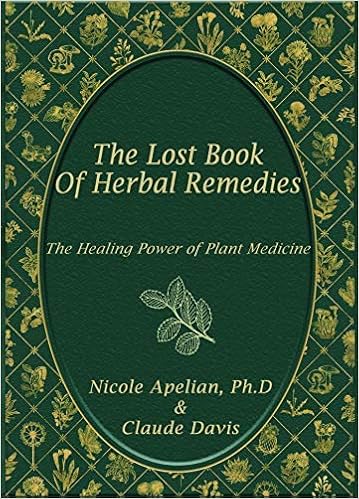 bOOK BY Dr Nicole Apelian In this era, everyone should grow PLANTS & TRESS. We must have to stop CLIMATE CHANGE because the environment is getting worst Day by Day. So, if you really want to take action & want to Grow Plants & Trees? then Here is the book link, purchase it, Read it, and Implement the ideas given in it!!!! Buy Now |
Years later

Chaplin soon became the target of right-wing moneylenders. Mississippi Representative John E. Rankin pushed for his deportation.
In 1952, the United States Attorney General was forced to announce that he would not allow Chaplin, who had left for Britain on vacation, to return to the United States until he had proved "moral value."
The enraged Chaplin said goodbye to the United States and took up residence on a small farm in Corsair-sur-Wavy, Switzerland.
Near the end of his life, Chaplin last visited the United States in 1972 when he was awarded the Honorary Academy Award.
In 1975, Chaplin gained further recognition when he was knighted by Queen Elizabeth ll.
In the early morning of December 25, 1977, Chaplin died at his home in Corsier-sur-Vavi, Vaud, Switzerland. His wife, Na, and his seven children were on his bed at the time of his passing.